Senior secondary students from across the region had the opportunity to step inside a working hospital and explore future careers in medicine at this year’s Rural Medical Pathway Careers Day.
Held at Echuca Regional Health on Wednesday 10 June, the event gave Year 11 and 12 students interested in medicine a practical insight into rural healthcare, study pathways and the day-to-day work of doctors and medical students.
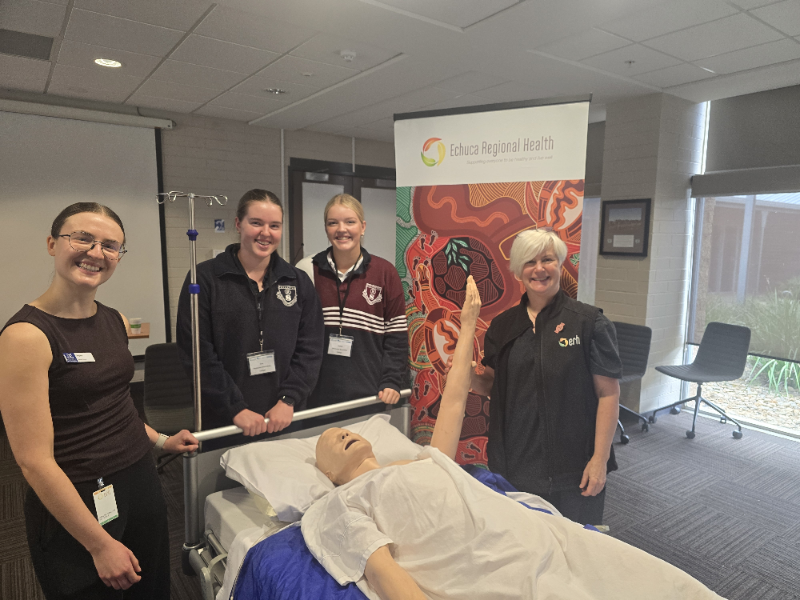
Students took part in a range of hands-on clinical skills sessions, including measuring blood pressure, using a stethoscope and completing a basic cardiac examination, surgical tying, and ankle examination and bandaging. They also toured key areas of Echuca Regional Health, gaining a better understanding of how different departments operate and how hospital spaces are adapted to meet patient needs.
A highlight of the day was the opportunity to speak directly with junior doctors and medical students. Students were able to ask questions about studying medicine, working in a regional hospital, and the different pathways available for young people considering a future in healthcare.
“My favourite part of the day was learning surgical ties, as it was both engaging and informative. I would highly recommend the ERH Rural Medical Pathway Careers Event to anyone interested in a career in medicine and wanting to learn more about the industry,” said one St Joseph’s College Echuca student.
Student feedback was overwhelmingly positive, with participants describing the day as valuable, practical and inspiring. Students particularly appreciated the chance to learn new skills, meet others with similar career interests, and hear honest advice from people currently studying and working in medicine.
CCLLEN thanks Echuca Regional Health, Craig Canham, Dr Kate Schultz, junior doctors, medical students and all staff involved for providing such a meaningful opportunity for local students.
The Rural Medical Pathway Careers Day continues to play an important role in supporting young people to explore local career pathways and see that a future in medicine is possible in regional communities.
Follow